

Allison Zuckerman Rewrites Art History To Reclaim Famous Females
Allison Zuckerman Rewrites Art History To Reclaim Famous Females
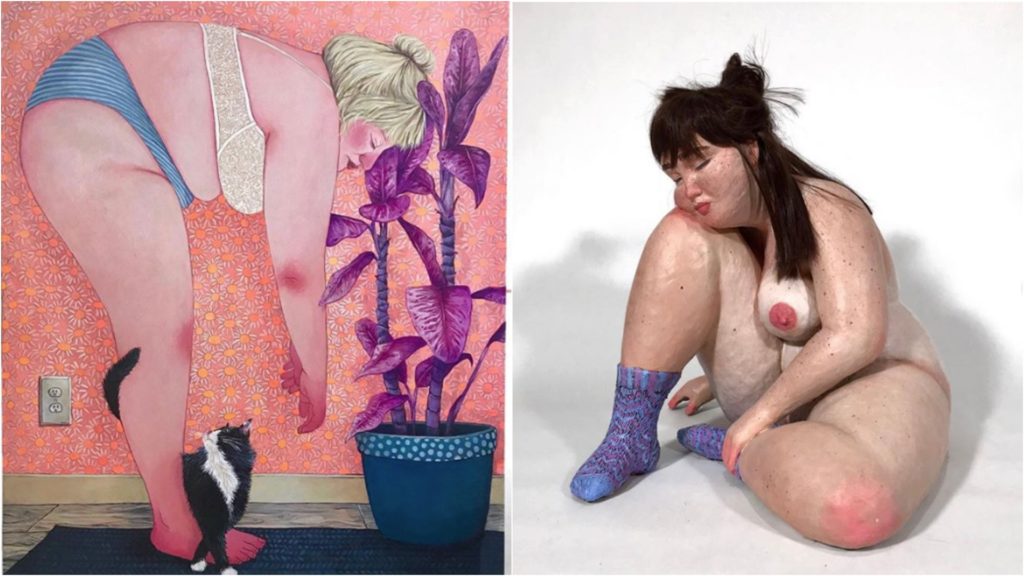
Shona McAndrew is a vivacious French artist currently residing in Philadelphia. Her work explores all average aspects of her life, whether it’s playing with her cat or trying to get out that stubborn ingrown hair. Shona elevates the mundane by her cheery colors and by creating life-size sculptures of these ‘everyday’ scenes. What makes her work so universal is that she herself, and the women she creates in her works, are not thin models in magazines – but soft and curvy, – oozing with self-confidence and self-love.
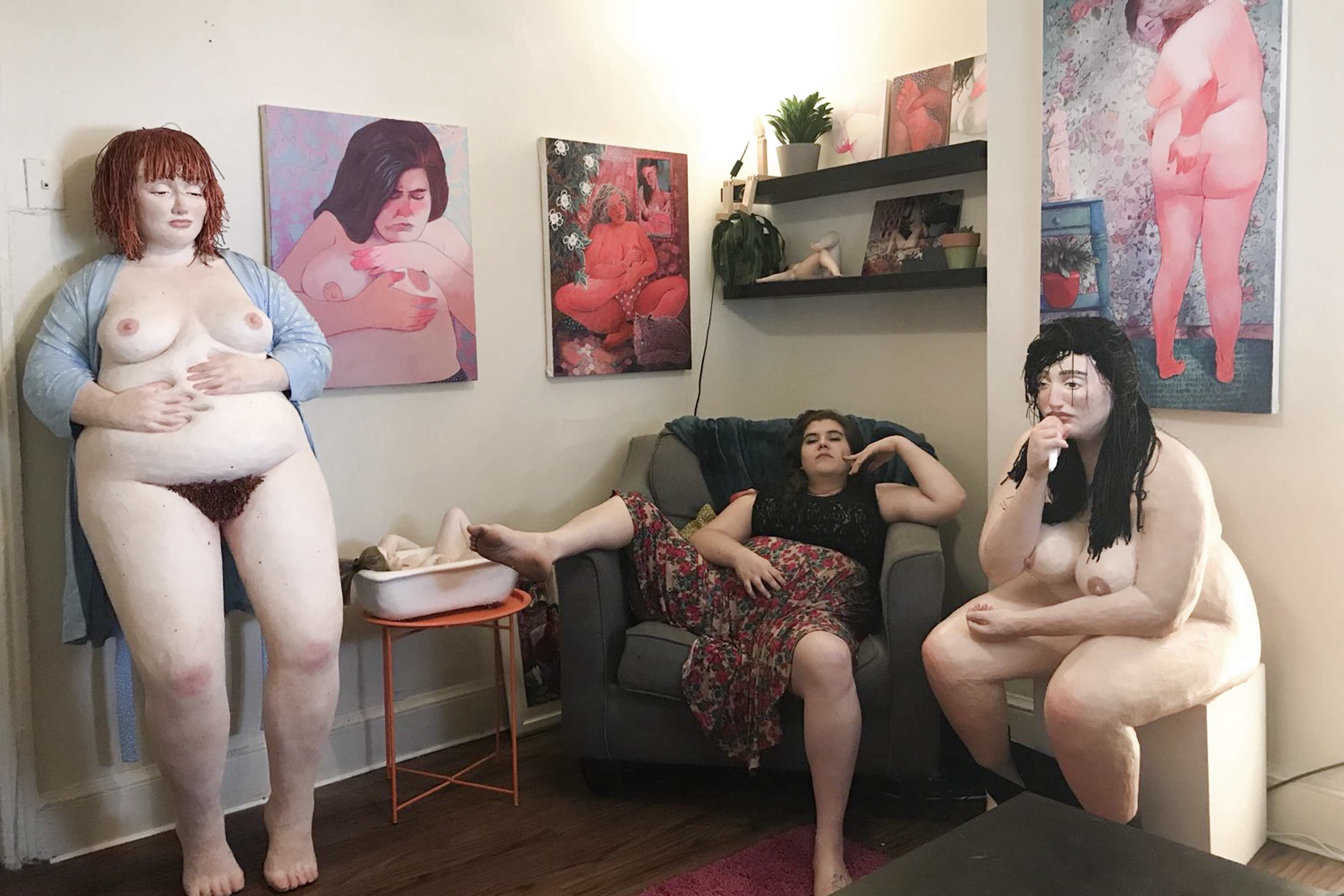
Painting your nails, waxing your body hair, sitting on the toilet—these are not glamorous activities. But for artist Shona McAndrew, that’s where a woman’s beauty lies. The Paris-born artist’s first solo show, “Muse,” curated by Cultured Contributing Editor Maria Brito at TriBeCa’s Chart Gallery, includes both life-size and miniature sculptures as well as paintings, all of or inspired by the plus-size women in her life. Her work urges the viewer to come into a woman’s most private spaces—her bedroom, living room, bathroom—and revel in her environment. “I wanted to create moments of privacy where women are really themselves,” she says. McAndrew’s pieces add to the rapidly growing global conversation about body positivity, urging us to break free from the confines of the traditional norms of beauty. Inspired by classical harem paintings where women lounge around waiting for men, she strives to reclaim the word by showing what real-life women look like in their moments of coveted privacy.
To create each work, McAndrew sends a close friend a photograph of herself, often naked, asking them to interpret it and respond with a pose of their own. These mutual exchanges bring a sense of the consensuality and intimacy that is often lost in modeling. She doesn’t want her subjects to feel like objects, and so she fosters an equality in her practice: “I give a piece of myself to them and they give me a part of themselves back. They’ve given me parts of themselves, their bodies, and allowed me to reinvent the world.”
What motivates McAndrew is a desire to make women feel beautiful, particularly those who are not often depicted as such. Both her sculptures and paintings are saturated with vibrant colors, and each woman is subtly seductive, graceful and strong. The sculptures’ tangible quality forces the viewer into conversation with the woman it represents, the largest standing over six feet tall. McAndrew’s paintings, meanwhile, are full of references to classical art, breadcrumbs for her fellow history buffs to discover.
Ultimately, she wants her audience to see the true beauty of those in her art, to try and let go of what society and art history has taught them about women and their bodies. “They are art history. I want them to feel glorious,” she says. McAndrew is part of a movement today that advocates for more diverse representation of body types that, until recently, were often shunned. With each piece she creates, McAndrew asks us to consider body positivity and acceptance on both a social and individual scale. While understanding the weight of her work and the role it plays in the larger conversation, she states her innermost goal with a heartfelt simplicity: “I want these women to feel more beautiful than anything.”
It feels quite important to add to the very limited assortment of bodies seen together, something that was very limiting to me growing up. I genuinely did not know that a fat woman could be with a thin man (or any man at all). My experience of romance and intimacy was what I saw in movies or media, conventionally attractive with conventionally attractive, no exceptions.
Most of your work is about yourself and your daily life, including the intimate parts with your partner, Stuart. What has it been like displaying that relationship to the world?
It feels quite important to add to the very limited assortment of bodies seen together, something that was very limiting to me growing up. I genuinely did not know that a fat woman could be with a thin man (or any man at all). My experience of romance and intimacy was what I saw in movies or media, conventionally attractive with conventionally attractive, no exceptions.
To create an alternative to that model, to process this experience and to represent it to the world, has been, in a word, empowering. My whole life, I had been taught that I would not be able to have a relationship like this. When I found myself in one, I immediately had a hundred questions. I hope my work asks similar questions of the viewer.
One of the many things I admire about your work is your paper mache sculptures and the amazing amount of detail you are able to convey. What originally drew you to expanding your art practice into this 3D medium?
When I started to consider the experience of the viewer, sculpture became increasingly the right direction for my practice. At the time I started making these sculptures, I was unsure how I was going to confront the male gaze in my paintings. I felt like I was just adding to a never-ending repertoire of images of women, images to be consumed. Sculpture allowed me to truly confront the viewer. I wanted to change the experience of looking that I had created in my work, from a quick voyeuristic glance to a slow complicated journey. I like that my sculptures of women physically take up space. Viewers have to move around the bodies. The sculptures challenge the viewer in a way that I had yet to experience with painting.
In many of your posts on social media you use the hashtag #effyourbeautystandards, first used by the famous plus-size model Tess Holiday. What drew you to this movement and using this hashtag?
I started following #effyourbeautystandards as soon as I joined Instagram. I had never really seen plus-size and othered models before until I joined the movement. I remember the first time I found Tess Holiday’s many intimate pictures of her life and felt such envy of how she portrayed herself to the world. Shameless and unapologetic. Though I still struggle with many parts of who I am and how I fit into the world, I have come very far from the version of myself who was discovering EYBS. I was still very scared of looking myself in the mirror so to see these women with bodies like mine expose themselves with pride was eye opening.
I started by making collages using my own body, which meant I had to both photograph myself (I took my first ever full body nude picture) and look at the footage. Looking at the footage and confronting my own body was both wildly intimidating and liberating at the same time. Something about externalizing my body into an art object that made me reconsider my relationship to myself and my body.
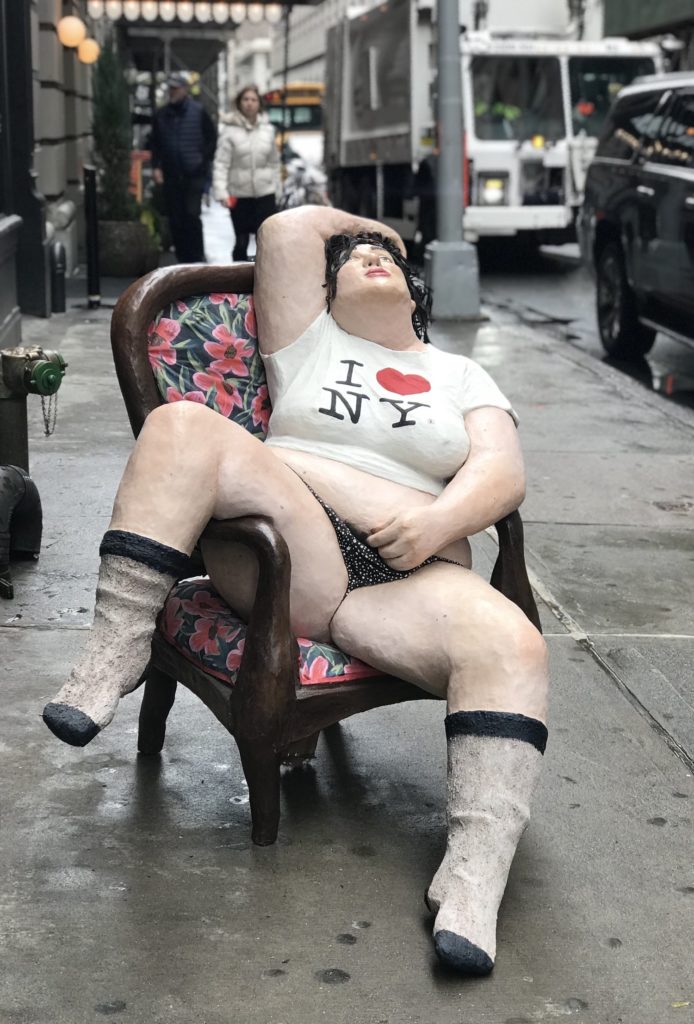
Sculpture allowed me to truly confront the viewer. I wanted to change the experience of looking that I had created in my work, from a quick voyeuristic glance to a slow complicated journey. I like that my sculptures of women physically take up space. Viewers have to move around the bodies. The sculptures challenge the viewer in a way that I had yet to experience with painting.